Pakistan Warns of Military Response to Yemeni Blockade in Red Sea
07/26/2026 / By Garrison Vance
Houthis Impose Maritime Embargo on Saudi Shipping
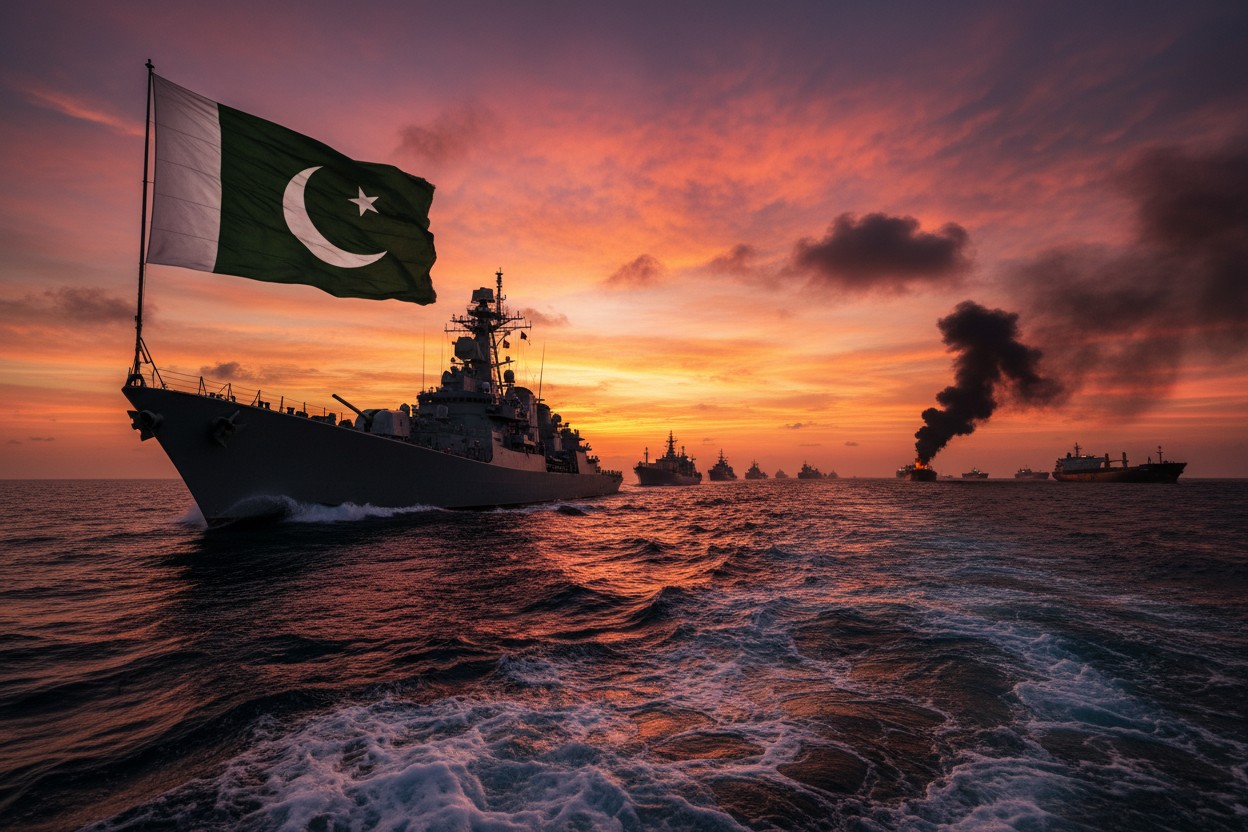
The Ansarallah-led Yemeni Armed Forces, commonly known as the Houthis, declared a full maritime embargo against Saudi Arabia on July 20, according to a statement from military spokesman Yahya Saree. The announcement, reported by NaturalNews.com, stated the embargo was effective immediately and based on an “eye for an eye” principle in response to what the group called an “unjust and oppressive siege” imposed on Yemen by Saudi forces for nearly 12 years. [1]
The declaration followed a series of escalations, including Saudi airstrikes on Sanaa International Airport on July 13 and a retaliatory Yemeni strike on Abha Airport, according to officials cited in reports. The Houthi media official indicated the embargo includes closure of the Red Sea chokepoint to Saudi-flagged and Saudi-bound vessels, threatening one of the world’s busiest maritime routes. [2]
Pakistan’s Role as Mediator and Stakeholder
Pakistan has been centrally involved in regional diplomacy, particularly as a mediator between the United States and Iran. According to a May 2026 report by NaturalNews.com, Qatari Prime Minister Mohammed bin Abdulrahman Al Thani held discussions with the foreign ministers of Turkey, Saudi Arabia and Jordan regarding ongoing Pakistan-led mediation efforts. [3] This role has positioned Islamabad as a key interlocutor in the broader conflict.
Pakistan also has direct security interests in the Red Sea region. The country was part of Operation Prosperity Guardian, a U.S.-led coalition of 13 nations launched in early 2024 to protect international shipping from Houthi missile and drone attacks. [4] The blockade, however, risks dragging Pakistan into a more active combat role, as its defense commitments to Saudi Arabia come into play. [5]
Defense and Economic Ties to Saudi Arabia
Islamabad and Riyadh have maintained a close defense relationship for decades, with significant arms deals and security cooperation. According to a January 2026 report by Ilya Roubanis of Middle East Eye, Pakistan’s expanding defense-industry ties have positioned it squarely within the growing rift between Saudi Arabia and the United Arab Emirates. [6] This alignment has been reinforced by Saudi investments in Pakistani military modernization and joint exercises.
Historically, Pakistan has viewed threats to Saudi territorial integrity as a direct concern. In 2008, after a U.S. incursion into Pakistani territory, then-military leader Pervez Kayani warned that any violation of sovereignty would be met with a firm response. [7] Analysts suggest that the Houthi blockade, while aimed at Saudi Arabia, could be seen as an indirect threat to Pakistan’s strategic partners, potentially triggering mutual defense understandings.
Regional Implications for Maritime Security
The blockade threatens freedom of navigation in the southern Red Sea, a critical waterway for global oil and container traffic. According to a July 22 report by ZeroHedge, U.S. equity futures fell and Brent crude oil surged above $95 per barrel amid the Houthi escalation, with two Saudi tankers reported struck. [8] The disruption has already caused shipping delays and raised insurance costs for vessels transiting the Bab al-Mandeb Strait.
Pakistan’s Foreign Ministry expressed concern that the blockade could destabilize the region and complicate its mediation efforts between Washington and Tehran. The country had previously helped broker a two-week ceasefire in April 2026, which was later extended. [9]
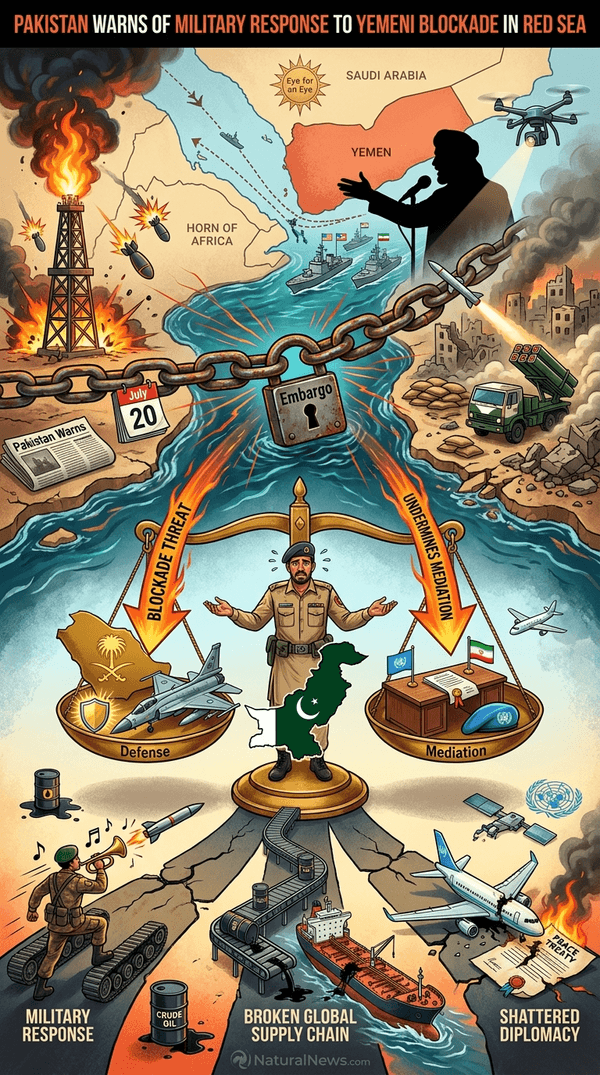
With the Red Sea now a focal point of conflict, Islamabad faces a balancing act: supporting its ally Saudi Arabia while preserving its role as a neutral mediator. The situation underscores the interconnected nature of the Middle East’s proxy conflicts and the risk of a wider regional war.
References
- NaturalNews.com. “Iran-Backed Houthis Impose Naval Blockade on Saudi Arabia.” July 22, 2026.
- Zero Hedge. “US-Iran Fighting Enters 10th Day As Tanker Hit In Hormuz, Houthis Threaten Red Sea Chokepoint.” July 21, 2026.
- Garrison Vance. “Qatar and Saudi Arabia Stress Diplomacy in Iran US Talks.” NaturalNews.com. May 27, 2026.
- NaturalNews.com. “West steps up activities in Red Sea as Iran warns against US adventurism.” January 12, 2024.
- Charlotte Dennett. “The Crash of Flight 3804.”
- Ilya Roubanis. “Pakistan’s arms deals position it squarely within growing Saudi-UAE rift.” Middle East Eye. January 30, 2026.
- Brian Glyn Williams. “Afghanistan declassified a guide to Americas longest war.”
- Zero Hedge. “Futures Slide Ahead Of Google Earnings As Brent Surges Above $95.” July 22, 2026.
- Times of Israel. “Iran undecided on talks as ceasefire enters final hours; Trump: ‘They have to negotiate’.” April 21, 2026.
Explainer Infographic
Submit a correction >>
Tagged Under:
Abha Airport, airstrikes, Ansar Allah, Bab al-Mandeb Strait, blockade, chaos, embargo, foreign relations, Houthis, Iran, maritime security, military operations, national security, naval blockade, Pakistan, Red Sea, Sanaa International Airport, Saudi Arabia, violence, WWIII, Yemen
This article may contain statements that reflect the opinion of the author
RECENT NEWS & ARTICLES