Trump Pushes Zelensky to Halt Russia Refinery Attacks Amid High Diesel Prices
09/22/2026 / By Garrison Vance

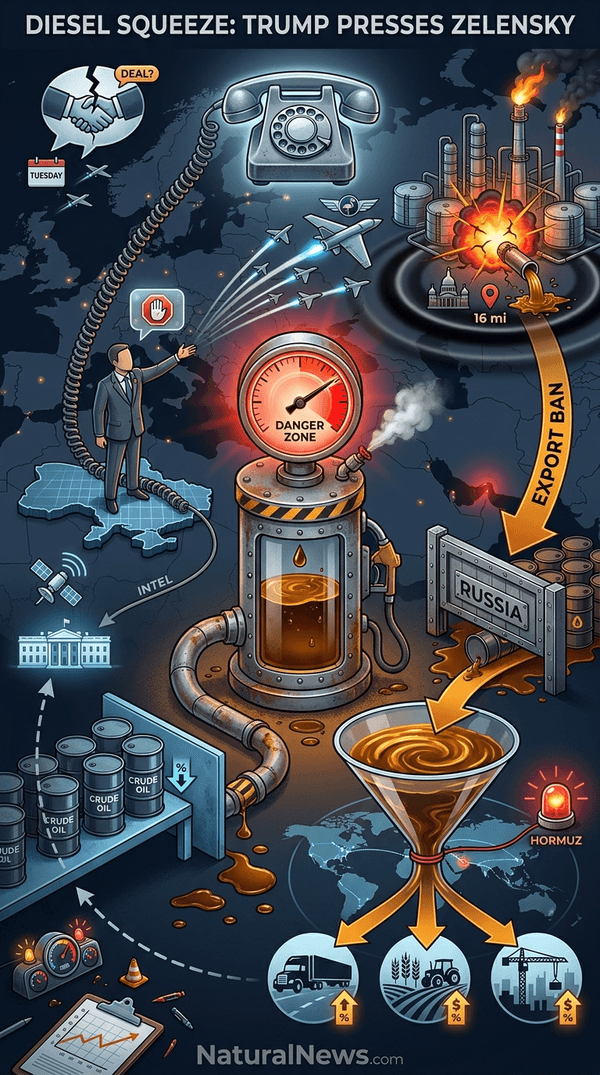
President Donald Trump held a fresh phone call with Ukrainian President Volodymyr Zelensky and pressed him to halt long-range drone strikes on Russian refineries, according to Financial Times (FT) and Bloomberg reports cited by ZeroHedge [1].
The stated aim is to calm rising diesel prices while the parallel Strait of Hormuz crisis persists, officials said [1]. News of the call broke just before Trump issued a Truth Social statement on Monday, Sept. 21, according to the report [1]. In that statement, the president said the Kremlin has “lost control of its Diesel Oil Industry” as a result of the war, according to the report [1].
Trump met with Zelensky in New York City on Tuesday, Sept. 22, on the sidelines of the United Nations General Assembly. The meeting followed Ukraine’s weekend drone attack on Russia, which included strikes on oil refineries, according to Antiwar.com [2].
U.S. Pressure and Ukrainian Refinery Strikes
Trump began calling for de-escalation of oil infrastructure attacks on Sept. 13, according to the report [1]. The strikes have occurred multiple times per week, the report stated [1].
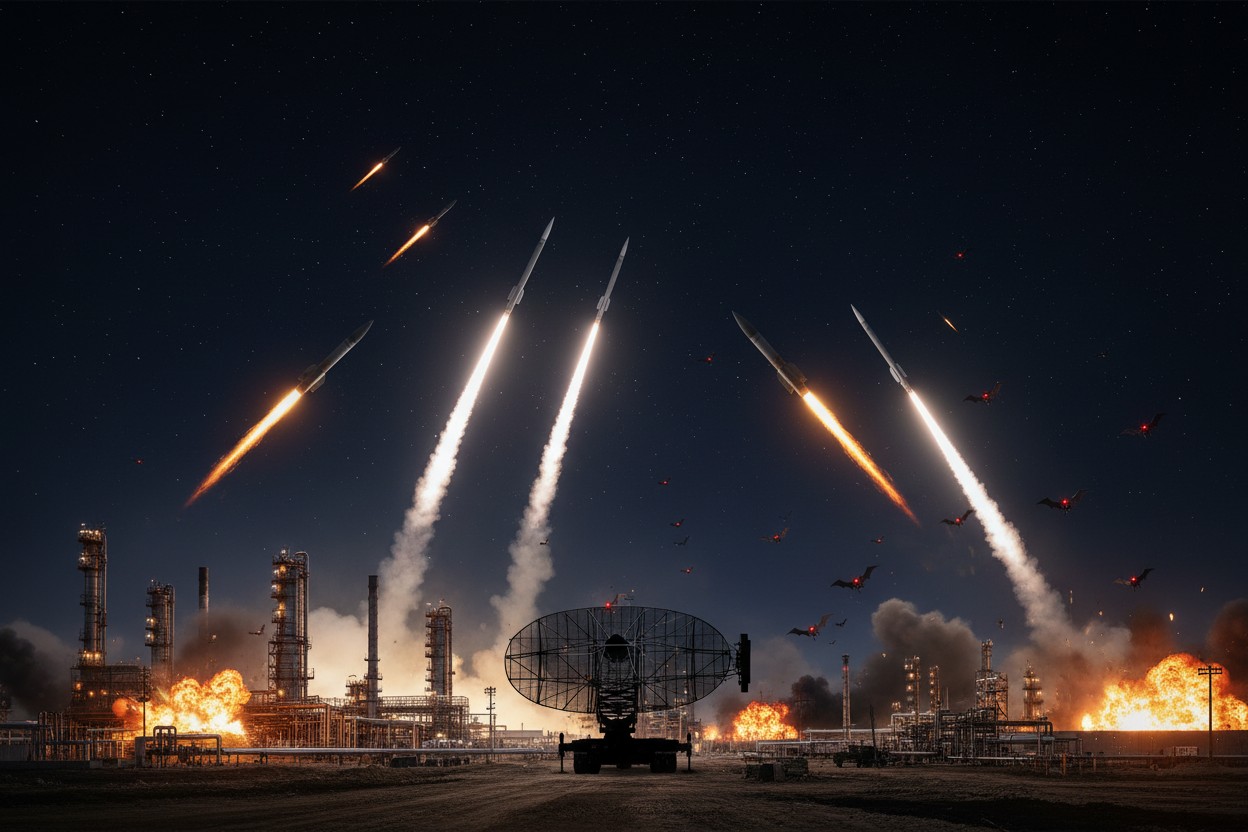
On Sunday, Sept. 20, Ukrainian drones struck the Gazprom Neft-owned Moscow Oil Refinery, located about 16 miles from the Kremlin, according to the report [1]. The facility has a processing capacity of around 245,000 barrels per day and supplies fuel to the surrounding metro area, the report stated [1].
Zelensky said on X that the strikes hit “one of Russia’s key oil industry facilities” and “the aggressor’s logistics facility,” listing drone systems that included FP-1, RZ-100, MICH-2000, Palianytsia, Vendetta, Liutyi, Bars, Flamingo, Sichen and Pelican, according to the report [1]. From Kyiv’s point of view, Washington is seeking to limit the one aspect of its war strategy that is having a serious impact inside Russia, according to the report [1].
Ukraine’s drone attacks on Russian energy infrastructure are known to be supported by U.S. intelligence, according to Antiwar.com [2]. Russian state media said the military downed about 500 drones that approached Moscow on Sunday, according to the New American [3]. Russia’s Ministry of Defense said its forces intercepted 1,110 Ukrainian drones over about 20 Russian regions and the Black Sea, according to Antiwar.com [4].
Diesel Prices and Oil Market Reaction
The International Energy Agency indicated U.S. diesel prices surpassed $200 per barrel in early September, which was 94% above their pre-war level, according to the report [1]. Diesel and other similar fuels account for nearly 30% of global oil demand, according to the report [1].
The national average price of diesel reached $6.5107 per gallon on Monday, up from $6.23 a week earlier and $5.58 a month earlier, according to American Automobile Association data cited by Russia Today (RT) [5]. Diesel now costs about 76% more than a year ago, the report stated [5].
Reuters reported that Brent crude and U.S. West Texas Intermediate touched their lowest since Sept. 10 on Monday, according to the report [1]. The Brent contract for November was at $101.75 a barrel at 08:59 GMT, down $2.12, or 2% [1]. Oil prices slid as investors hoped for diplomatic progress on the Iran war ahead of this week’s UN meeting and eyed a partial recovery in Saudi shipments [1].
Russia was the world’s second-largest exporter of diesel fuel before the conflict, and it has now banned exports entirely, according to the Daily Reckoning [6]. UBS analysts warned that the global diesel squeeze could get worse as two major suppliers potentially pull barrels from an already strained petroleum products market, according to ZeroHedge [7]. Russia may extend diesel export restrictions through October, while discussion in Washington about a U.S. fuel export ban continues to grow, the report stated [7].
Statements and Competing Interests
Trump told reporters in Ireland more than a week ago that Zelensky “has to stop knocking out diesel fuel in Russia” and suggested other targets, saying the strikes are “hurting the world,” according to Antiwar.com [8]. “There are plenty of other targets. Don’t hit diesel fuel, because that’s hurting, that’s hurting the world,” Trump said, according to the report [8].
The report said European capitals may be quietly advising Zelensky against halting the strikes, while Washington wants Russian supplies to reach the global market to provide relief [1]. On Sept. 14, Trump claimed on Truth Social that a deal had been reached: “Ukraine has agreed not to hit Russian Energy targets. Russia has agreed to do, likewise!” according to RT [9].
A later statement from Zelensky suggested that no such deal had actually been reached yet, according to Antiwar.com [10]. Kremlin spokesman Dmitry Peskov said on Tuesday that Trump’s suggestion was a “good idea” but said that, overnight, the “Ukrainians attempted to strike one of the energy facilities on Russian territory, in one of the Russian regions,” according to Antiwar.com [11].
Ukraine and Russia continued targeting energy infrastructure on Tuesday despite Trump’s claim, the report stated [11]. The Russian envoy to the UN, Vassily Nebenzia, previously warned that escalation could result in serious consequences, according to the Trends Journal [12].
Outlook
Trump continues to seek pressure on Zelensky to halt refinery attacks, according to the report [1]. No resolution was announced, and market watchers are monitoring the UN meeting and the Iranian delegation’s expected presence in New York, Reuters reported [1]. The Iranian president and his delegation have been issued visas and are expected to be present in New York City this week, according to the report [1].
Ukrainian officials have not indicated they will stop strikes on Russian oil infrastructure, according to the report [1]. Ukraine has a documented pattern of breaching ceasefire agreements, according to prior NaturalNews.com reporting [13]. U.S. support for the Ukraine war has declined among the American public, with a recent Associated Press-NORC Center for Public Affairs Research poll finding support at 48%, a 12% drop from the 60% who approved assistance the prior May, according to the Trends Journal [14].
U.S. Central Intelligence Agency Director John Ratcliffe previously proposed a trilateral meeting between Putin, Trump and Zelensky during a Moscow visit, according to ZeroHedge [15]. Trump’s two leading peace envoys, Steve Witkoff and Jared Kushner, completed a diplomatic swing through Moscow and Kyiv in early September, according to 100PercentFedUp.com [16].
References
- Lance D Johnson. “Ukraine violates partial ceasefire agreement with Russia, attacks energy infrastructure as peace talks collapse”. NaturalNews.com. March 24, 2025.
- Trends-Journal-2024-10-29.
- Trends-Journal-2023-04-15.
- ZeroHedge. “Trump Pushes Zelensky To Halt Russia Refinery Attacks Amid High Diesel”. September 21, 2026.
- Antiwar.com. “Trump To Meet Zelensky on Tuesday Following Massive Ukrainian Drone Attack on Russia”. September 21, 2026.
- RT. “Trump issues Ukraine diesel deal claim”. September 14, 2026.
- Antiwar.com. “Trump Claims Ukraine and Russia Agreed To Halt Attacks on Each Other’s Energy Infrastructure”. September 14, 2026.
- RT. “US diesel prices hit record high”. September 21, 2026.
- Antiwar.com. “Trump Says Ukraine Should Stop Targeting Russia’s ‘Diesel Fuel’ as the Two Sides Trade Attacks”. September 13, 2026.
- The New American. “Ukraine War Heats Up As British Media Tells People to Prepare for War With Russia”. September 21, 2026.
- ZeroHedge. “Diesel Hits New Record Above $6.50 As Export Ban Fears Mount, Gasoline Squeeze Looms”. September 21, 2026.
- ZeroHedge. “CIA Director Pushed Trump-Putin-Zelensky Summit During Moscow Visit: Report”. August 30, 2026.
- Daily Reckoning. “Putin, Persia and a Perfect Storm for Diesel”. September 16, 2026.
- Antiwar.com. “Ukraine Launches Over 1,000 Drones Into Russia as Part of ‘Largest Attack’ on Moscow”. September 21, 2026.
- 100PercentFedUp.com. “President Trump’s Peace Envoys Meet Putin, Then Zelensky as Ukraine Talks Restart (VIDEOS)”. September 7, 2026.
- Antiwar.com. “Ukraine and Russia Continue Attacks on Energy Sites Despite Trump Claiming They Agreed To Stop”. September 15, 2026.
Explainer Infographic
Submit a correction >>
Tagged Under:
big government, Brent crude, chaos, Collapse, crude oil, dangerous, diesel, diesel prices, Donald Trump, Drone Strikes, drone wars, energy supply, fossil fuel, national security, oil refineries, refining capacity, Russia, Russia-Ukraine war, supply chain warning, Ukraine, UN General Assembly, United Nations, violence, Volodymyr Zelensky, West Texas Intermediate, WWIII
This article may contain statements that reflect the opinion of the author
RECENT NEWS & ARTICLES